Showing posts with label Health. Show all posts
Sunday, 28 March 2010
Why Does a Salad Cost More Than a Big Mac?
In the United States, the Farm Bill, a massive piece of federal legislation making its way through the US Congress, governs what children are fed in schools and what food assistance programs can distribute to recipients. The bill provides billions of dollars in subsidies, much of which goes to huge agribusinesses producing feed crops, such as corn and soy, which are then fed to animals. By funding these crops, the government supports the production of meat and dairy products—the same products that contribute to America's growing rates of obesity and chronic disease. Fruit and vegetable farmers, on the other hand, receive less than 1 percent of government subsidies.
The US government also purchases surplus foods like cheese, milk, pork, and beef for distribution to food assistance programs—including school lunches. It is not required to purchase nutritious foods.
When the House of Representatives debated the bill in July, PCRM, along with many other health and public interest groups, supported the Fairness in Farm and Food Policy Amendment, which was offered by Reps. Ron Kind (D-WI) and Jeff Flake (R-AZ). This amendment would have limited government subsidies of unhealthy foods, cut subsidies to millionaire farmers, and provided more money for nutrition and food assistance programs for Americans and impoverished children overseas.
Unfortunately, politics doomed the reform effort. At the eleventh hour, House Speaker Nancy Pelosi (D-CA) feared that freshman representatives who voted to cut subsidies might risk losing their seats in farm states in the 2008 elections, endangering the Democratic majority. The reform amendment was defeated 117 to 309.
Nonetheless, Congress did make some modest changes to the Farm Bill’s subsidy programs at the very last minute.
This fall, the Senate will have its turn debating and voting on the bill. PCRM will need your help again to encourage senators to cut subsidies for unhealthy foods and increase support for fruits, vegetables, and vegetarian foods. Other groups, including the American Medical Association and the President’s Cancer Panel, are also calling on Congress for sweeping reforms.
Good Medicine.
Tuesday, 26 January 2010
Know your fats
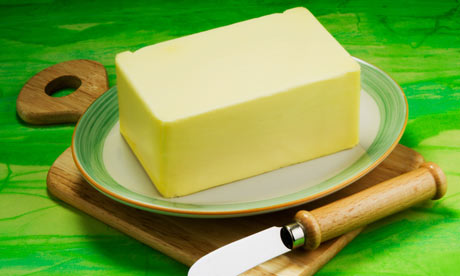
We're always being told to reduce our fat intake. But is cutting out butter really the best option?
In the last 20 years, one type of fat in particular has been portrayed as being especially bad for us: saturated. We are submitted to a barrage of advice: "saturated fats are killing us"; "eat low-fat spread"; "don't use lard"; "trim off all the fat from meat". In the latest instalment of this long-running saga, heart surgeon Shyam Kolvekar is now demanding that we banish butter from our diets.
But no entire food group needs to be (or should be) completely removed from our diet and fat is no exception. Each cell in the body requires fatty acids to absorb vitamins A, D, E and K. Fat adds to the taste of food and is an important energy source. We need it to support our natural growth, to keep skin healthy and taut, to protect our vision and boost our immune functions. We need it to help our brains function normally, too. And we need to eat a healthy balance of naturally occurring fats to get these benefits.
So how much fat is safe? Fats should not take up more than 35% of one's daily calorie intake. That may sound like a lot, but fat is a very intensive calorie source. For example, 100g of butter – 10 of the small packs that cafes provide with a scone – provide 717 calories, making up one third of the average female's recommended daily calorie intake of 2,000 (men's is higher, at 2,500). And "good" fats don't contain any fewer calories than bad fats, so substituting an olive oil-based spread for butter won't make you slimmer (and it will likely be laden with colourants and other undesirable additives).
But there is more to fat than calories, so knowing your trans fats from your monounsaturates is one of the best things you can do for your health.
Saturated fat
This is the most traditional source of fat and is largely animal-based. It includes the fat found in meats, butter, cheese and cream. There are also many food products that contain these fats, with cakes, biscuits and pastries being the obvious culprits. Slightly less obvious are items such as barbecued chicken, many sauce mixes, pre-frozen roast vegetables and confectionary bars. Guidelines tell us that we should not exceed 11% of our daily fat intake in this form. It is seen as a bad fat because too much of it will contribute to hardening and narrowing of the arteries.
Unsaturated fats ('good' fats)
There are two main kinds of unsaturated fats – monounsaturated and poly unsaturated. The former come mainly from the oleic acid found in most nuts, avocado pears, rapeseed and olive oils. Monounsaturated fat is believed to lower cholesterol and may assist in reducing heart disease. Like polyunsaturated fat, it provides essential fatty acids for healthy skin and the development of body cells. And polyunsaturates are the essential fatty acids that contain the richest sources of Omega-3 and Omega-6, mainly found in fish oil, sunflower and corn oils and products made from these oils. Polyunsaturates can help reduce the "bad" cholesterol caused by saturated fat. You will find good sources in cold-pressed, unfiltered organic oils such as flax and rapeseed as well as in fish oils.
Trans fatty acids (TFAs)
A by-product of hydrogenated vegetable oil, TFAs are technically monounsaturates, but have been proven to be dangerous to health. Denmark was the first country to cut them out completely, saying there was "no such thing as a safe limit". Switzerland and Austria have since followed. And this week the UK Faculty of Public Health, representing 3,300 doctors, is urging ministers to eradicate them here, too.
TFAs were originally created in 1903 when an American chemist worked out that by boiling cottonseed oil to 260C, he could make it solidify. Why did he want to do that? To make cheap candles. Proctor & Gamble spotted the potential for food and bought the patent in 1909. It soon launched Crisco shortening in the US, a wonder food that contained no animal fat, didn't soak up other flavours and had a great shelf life. It wasn't until the 1970s that researchers discovered how damaging TFAs were.
TFAs do not just lower your "good" cholesterol level; they simultaneously raise the "bad". The most important research began in the US in 1976 and ran for 13 years. It found that a 2% increase in TFA calories would bring a 23% increased risk of heart disease. So, in terms of heart health, consuming 25g of TFA is equivalent to eating an entire 227g block of butter. And something like a take-away pie could easily contain 15g of TFA.
These days, a voluntary code has drastically reduced the amount of trans fat in supermarket own-brand products, but look out for hydrogenated vegetable oil on the ingredients lists of familiar brand names. You will still find it in cakes and confectionary, instant hot drinks, ready-bake cake mixes and, most commonly, where it is unidentified: that is, in take-away foods (especially anything that has been deep-fried). Trace amounts of TFAs (less than 1%), naturally occur in meat and milk too, but these do not seem to carry any risk.
So our Victorian ancestors, it seems, had a point: stick to natural sources and just watch the quantities. There really is nothing wrong with butter as long as you spread it on in moderation.
Guardian.co.uk
Wednesday, 7 October 2009
E. Coli Path Shows Flaws in Beef Inspection
Stephanie Smith, a children’s dance instructor, thought she had a stomach virus. The aches and cramping were tolerable that first day, and she finished her classes.
Then her diarrhea turned bloody. Her kidneys shut down. Seizures knocked her unconscious. The convulsions grew so relentless that doctors had to put her in a coma for nine weeks. When she emerged, she could no longer walk. The affliction had ravaged her nervous system and left her paralyzed.
Ms. Smith, 22, was found to have a severe form of food-borne illness caused by E. coli, which Minnesota officials traced to the hamburger that her mother had grilled for their Sunday dinner in early fall 2007.
“I ask myself every day, ‘Why me?’ and ‘Why from a hamburger?’ ”Ms. Smith said. In the simplest terms, she ran out of luck in a food-safety game of chance whose rules and risks are not widely known.
Meat companies and grocers have been barred from selling ground beef tainted by the virulent strain of E. coli known as O157:H7 since 1994, after an outbreak at Jack in the Box restaurants left four children dead. Yet tens of thousands of people are still sickened annually by this pathogen, federal health officials estimate, with hamburger being the biggest culprit. Ground beef has been blamed for 16 outbreaks in the last three years alone, including the one that left Ms. Smith paralyzed from the waist down. This summer, contamination led to the recall of beef from nearly 3,000 grocers in 41 states.
Read more by clicking this link...
New York Times. Oct 3, 2009.
Tuesday, 6 October 2009
Men Sleep on Mars, Women on Venus
Elderly women may complain about insomnia, but they really get more sleep than men their age.
That is the surprising finding of a Dutch study that used monitors and sleep diaries to assess the sleep patterns of almost 1,000 men and women ages 59 to 97 for 6 days, and found that the women slept a quarter of an hour longer, on average, than the men.
Yet when men and women were asked about the quality of their sleep, women were more likely to report it as poor.
“What we found is that men completely overreport their sleep — they have a strong tendency to make it sound better than it was,” said Dr. Henning Tiemeier, associate professor of psychiatric epidemiology at the Erasmus Medical Center in Rotterdam and principal investigator for the study, published in the Oct. 1 issue of the journal Sleep.
In fact, men did not sleep as well as women, the study found. They reported sleeping seven hours a night, but objective measures, including a monitor on the wrist that measured sleep time, indicated they slept less than six and a half hours. Their sleep was also more fragmented, possibly because they drank more alcohol than the women.
Though women reported more problems with their sleep, their reports were more accurate, Dr. Tiemeier said.
Are men just oblivious?
“One could say men have this gift of being more optimistic, that it’s a natural tendency,” Dr. Tiemeier said.
New York Times. Oct 5, 2009.
Sunday, 27 September 2009
Fast Food: Calories Per US Dollar
When it comes to weight issues, the quickest culprit to blame is the calorie. Losing weight and eating right can be hard when there are so many faster, less expensive, and more convenient options available, like fast food. But for those who watch what they eat and what they spend, here’s an interesting infographic that shows the calories per dollar (CPD) of some of our favorite fast food items.
Saturday, 19 September 2009
Is chocolate good for you?
In a study that will provide comfort to chocoholics everywhere, researchers in Sweden have found evidence that people who eat chocolate have increased survival rates after a heart attack — and it may be that the more they eat, the better.
The scientists followed 1,169 nondiabetic men and women who had been hospitalized for a first heart attack. Each filled out a standardized health questionnaire that included a question about chocolate consumption over the past 12 months. Chocolate contains flavonoid antioxidants that are widely believed to have beneficial cardiovascular effects.
The patients had a health examination three months after their discharge from the hospital, and researchers followed them for the next eight years using Swedish national registries of hospitalizations and deaths. After controlling for age, sex, obesity, physical inactivity, smoking, education and other factors, they found that the more chocolate people consumed, the more likely they were to survive. The results are reported in the September issue of The Journal of Internal Medicine.
But before concluding that a box of Godiva truffles is health food, chocolate lovers may want to consider some of the study’s weaknesses. It is an observational study, not a randomized trial, so cause and effect cannot be definitively established.
Even though the researchers controlled for many variables, chocolate consumption could be associated with factors they did not account for — mental health, for example — that might reduce the risk for death.
The scientists did not ask what kind of chocolate the patients ate, and milk chocolate has less available flavonoid than dark chocolate. Finally, chocolate consumption did not reduce the risk for any nonfatal cardiac event.
Still, Dr. David L. Katz, an associate professor of public health at Yale who was not involved in the work, said the study added “an interesting element, following a group of adults who’ve had a heart attack and noting an impressive reduction in cardiac deaths.” While the study is observational, he said, “the broader context is reassuring.”
While the chocolate eaters in the study had a statistically insignificant reduction in the risk of death from any cause over the eight-year span, the reduced risk for dying of heart disease was highly significant. And it was dose-dependent — that is, the more chocolate consumed, the lower the risk for death.
Compared with people who ate none, those who had chocolate less than once a month had a 27 percent reduction in their risk for cardiac death, those who ate it up to once a week had a 44 percent reduction and those who indulged twice or more a week had a 66 percent reduced risk of dying from a subsequent heart event. The beneficial effect remained after controlling for intake of other kinds of sweets.
A co-author of the paper, Dr. Kenneth J. Mukamal, an associate professor of medicine at Harvard, said that there was considerable data from other studies suggesting that chocolate lowered blood pressure and that this might be a cause of the lower cardiac mortality found in the study.
Dr. Katz, of Yale, agreed that “there are many reasonable biological mechanisms” for a protective effect from chocolate.
“I like the study,” he said. “It adds to the general fund of knowledge we already have.”
Dr. Mukamal sounded a note of caution about the findings.
“Although this is interesting and provocative, chocolate does not come without costs,” he said. “For people looking for a small snack to finish a meal, this is a great choice. But it should be supplementing healthy eating and replacing less healthy snacks.”
New York Times. September 15, 2009
Subscribe to:
Posts (Atom)