Sunday, 6 December 2009
BMX hero set to strike commercial gold
Hong Kong's first Games winner has marketers salivating over the possibilities
When Steven Wong clinched gold for Hong Kong in the men's BMX final of the East Asian Games yesterday, it wasn't just the spectators who were thrilled.
The marketing industry suddenly found themselves with their own coveted prize - a young, hip sports star they could use to sell everything from sodas to running shoes.
Many brands have already approached the 21-year-old to offer sponsorship and product endorsement deals.
Banks and insurance companies have also expressed an interest in recruiting Wong as an adviser for their internal sports programmes.
With more sponsors, Wong will have access to better training and more events, giving him a chance to climb to a level of sports celebrity that only a handful in the city have reached before.
"Hong Kong previously did not have any young and stylish sports icons. He will be one," said Daniel Chan Yan-nang, director of Action House International, a local sports marketing consultant. "Teenagers will see him as an idol."
Part of that appeal lies in the sport itself. BMX racing is young, emerging into the mainstream largely in the 1980s. Most of the sport's followers are in North America, but Wong's win will boost its profile in Hong Kong.
He couldn't have asked for a better platform: Wong was the flag bearer for the Hong Kong team in the opening ceremony last night.
"To marketers, visibility is essential in choosing a brand spokesperson," Chan said.
He said Wong was interested in getting sponsors for future competitions in Europe and North America. Only when he did well in these races would he have a shot at the 2012 London Olympics, Chan said.
With a Chinese father and a Belgian mother, Wong can barely speak Cantonese - save to introduce himself.
He was born in Belgium and grew up there, but in his youth visited Hong Kong to see family.
He has been spending more time in the city lately.
An athlete does not have to have a Hong Kong passport to represent the city in the Games.
Wong is likely to spend even more time in the city since the construction of the BMX Park at Kwai Chung - built with a grant of HK$20 million from the Hong Kong Jockey Club - will allow him more opportunities to train.
Wong grew up a soccer fan and BMX did not enter his life until he turned 12, when his father gave him a second-hand bicycle.
Before capturing yesterday's gold, he was already a four-time Asian BMX champion.
Wong is expected to shine for years to come as BMX riders can still be in top form when they reach 30.
Chinese University marketing professor Leo Sin Yat-ming said Wong was on the path to becoming a rising star.
"People will definitely remember him after making headlines today," he said.
Asked whether Wong would face a language barrier, Sin said: "The fact that he does not speak Chinese might make him look even more stylish."
The professor said Wong would be the ideal person to promote "young" products, such as soft drinks, gym shoes and sportx equipment.
He said Wong also interested marketers because he was cheaper to sponsor than Olympic gold-winning windsurfer Lee Lai-shan and Asian champion cyclist Wong Kam-po.
"Some might want to invest in him before he gets famous," Sin said.
SCMP. Dec 6, 2009.
Saturday, 5 December 2009
Man Builds Detailed Model Cars From Discarded Aluminum Cans
Meet Sandy Sanderson from New Zealand. Needing something to keep himself occupied after breaking his wrist in a motorcycle accident, he started building amazing model cars from discarded aluminum cans. His incredibly intricate work below.
Sandy's something of a renaissance man; draftsman, guitar player, teacher, motorcyclist, instrument maker and model builder. When he was in a motorcycle accident which shattered his wrist and put him out of action for a while, he needed something to do. While finishing a canned beverage he thought of model airplanes he'd seen made from cans and thought why not make cars out of the same material? And thus was born the CanCar. The "Coriba Climax" below is his first effort and while impressive in its own right you see the cars keep getting more and more technically detailed with each successive build. Very cool hobby Mr. Sanderson, and talk about a unique (though somewhat spendy) Christmas present opportunity.
Jalopnik.
Friday, 4 December 2009
Wednesday, 2 December 2009
Japanese fishing trawler sunk by giant jellyfish
A 10-ton fishing boat has been sunk by gigantic jellyfish off eastern Japan.
The trawler, the Diasan Shinsho-maru, capsized off Chiba`as its three-man crew was trying to haul in a net containing dozens of huge Nomura's jellyfish.
Each of the jellyfish can weigh up to 200 kg and waters around Japan have been inundated with the creatures this year. Experts believe weather and water conditions in the breeding grounds, off the coast of China, have been ideal for the jellyfish in recent months.
The crew of the fishing boat was thrown into the sea when the vessel capsized, but the three men were rescued by another trawler, according to the Mainichi newspaper. The local Coast Guard office reported that the weather was clear and the sea was calm at the time of the accident.
One of the largest jellyfish in the world, the species can grow up to 2 meters in diameter. The last time Japan was invaded on a similar scale, in the summer of 2005, the jellyfish damaged nets, rendered fish inedible with their toxic stings and even caused injuries to fishermen.
Relatively little is known about Nomura's jellyfish, such as why some years see thousands of the creatures floating across the Sea of Japan on the Tsushima Current, but last year there were virtually no sightings. In 2007, there were 15,500 reports of damage to fishing equipment caused by the creatures.
Experts believe that one contributing factor to the jellyfish becoming more frequent visitors to Japanese waters may be a decline in the number of predators, which include sea turtles and certain species of fish.
The Telegraph. Nov 2, 2009.
Tuesday, 1 December 2009
Solar-powered FM Radio
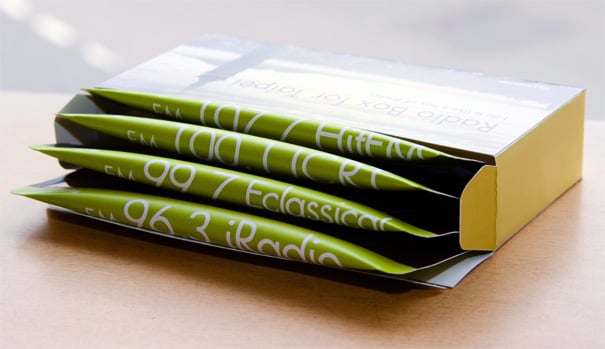
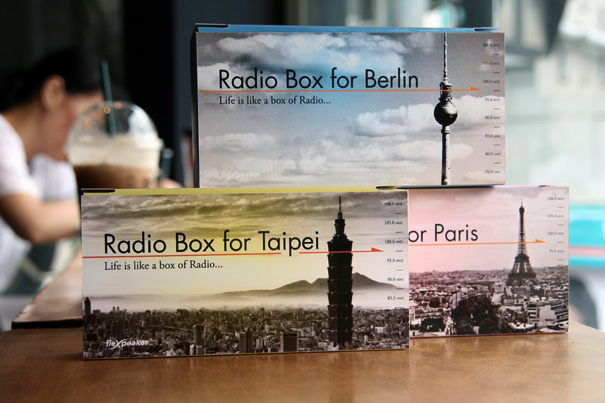
Flexio is this really awesome radio that’s solar powered and portable. I’m willing to overlook the “only one fixed FM channel” stand for the cute little paper packaging it comes in. I’m sure the dynamics of manufacturing this are going to be reasonable, because one can even use it for promotions and gifts…like ask someone to advertise on its package. The innovative factor comes from the flexible speaker & flexible solar cell. It’s designed to be used within the station-waves range, but could be modified to receive internet radio via WiFi or WiMax.
Designers: Wu Kun-chia, Wang Shih-ju, Chen Ming-daw & Liou Chang-ho
Yanko Design. Nov 30, 2009.
Designers: Wu Kun-chia, Wang Shih-ju, Chen Ming-daw & Liou Chang-ho
Yanko Design. Nov 30, 2009.
Monday, 30 November 2009
A harbourfront for the people - just a dream?
The people are the rightful owners of the harbour. But they have often been left lamenting what has been done with it and around it without true consultation. It sounds promising therefore that representatives of the harbour's owners - the public - have been promised a say in the development of prime waterfront land in Central, a move that could be a model for other projects. Two sites between IFC and the Central ferry wharves will be the first waterfront project to be developed by a public-private partnership. Members of the public will be included on a committee to advise on design and operation. In a city known for building on its most famous natural asset, and giving little access to the people, it remains to be seen how much weight will be given to public opinion, and how developers feel about being restrained by it. Secretary for Development Carrie Lam Cheng Yuet-ngor does not strike an optimistic note when she talks of appealing to developers' sense of social responsibility. We hope they have an abundance of it, but it would be bad policy to depend greatly on it.
The government, after all, is to provide the land for a developer to design, build and operate the sites. Granted, the developer will have to reserve 3,000 of the project's 22,000 square metres for non-lettable public facilities, provide a public piazza and a landscaped deck, and build extra commercial space over ferry piers. But Lam has signalled that she might also offer HK$200 million for work on the piers. Hong Kong makes poor use of its harbourside compared with many other cities. As a result, what we have to show are office blocks, luxury housing, shopping malls and a few promenades. In a perfect world, the Central sites would be turned over entirely to landscaped public space integrated with IFC, Exchange Square and the ferry piers. In the real world, public-private development may give us the best deal. It may be too much to expect developers to curb their appetites.
But the harbour is worth daydreaming about now and then on the off-chance such dreams might come true, and even hold good for the development of open space on newly reclaimed land in Wan Chai and two harbourfront sites in Quarry Bay.
SCMP. Nov 30, 2009.
Friday, 27 November 2009
Broadband access for all
EU call for 'universal' broadband
Brussels is considering making broadband access available for all.
The fast growth of broadband has led the European Commission to bring forward a review of the basic telecoms services Europeans can expect.
Current statistics suggest about 36% of households in EU member nations have high-speed net access.
When a majority of EU citizens are using a telecoms service, EC rules dictate that it becomes one every European should be able to enjoy.
Basic access
"High-speed internet is the passport to the Information Society and an essential condition for economic growth," said Viviane Reding, EU Telecoms Commissioner in a statement announcing the review.
"This is why it is this Commission's policy to make broadband internet for all Europeans happen by 2010."
The EC's Universal Service Obligations (USO) demand that all citizens who want them should be able to get access to basic telephone services.
It covers the production of a telephone directory, availability of payphones, specific measures for people with disabilities or those on low incomes and fixed phone access for local, national and international voice calls.
The obligations also include a clause demanding that the fixed line be of sufficient quality to "permit functional internet access". In the UK this has been interpreted to mean a line that can support a dial-up speed of 28.8 kilobits per second.
The EC reviews the USO every three years and in its report kicking off the latest overhaul, it said broadband was growing at a pace that would mean more Europeans were using it than not.
Figures from the EC suggest that from 2003-2007 broadband use in member nations tripled to 36% of households and had an annual growth rate of 20%.
Despite this, said the EC, there were "striking gaps" among member states and the coverage their citizens enjoyed.
In nations such as Denmark, Luxembourg and Belgium, 100% of the population can get broadband if they want it. By contrast, 60% of Romanians cannot get broadband access.
Even in nations such as Germany and Italy, which have booming broadband sectors, about 12% of the population is not covered by high-speed access.
The review aims to find out if the USO needs to be re-written to force telecoms firms to extend broadband to those areas competition will leave bereft of it.
It will also find out if a narrow-band access, aka dial-up, is sufficient to "permit functional internet access" or if the pace of change online means higher speeds are the minimum needed.
The EC is inviting submissions from telecoms firms, governments and citizens with the aim of producing a communique in 2009 and perhaps legislation in 2010.
Subscribe to:
Posts (Atom)